
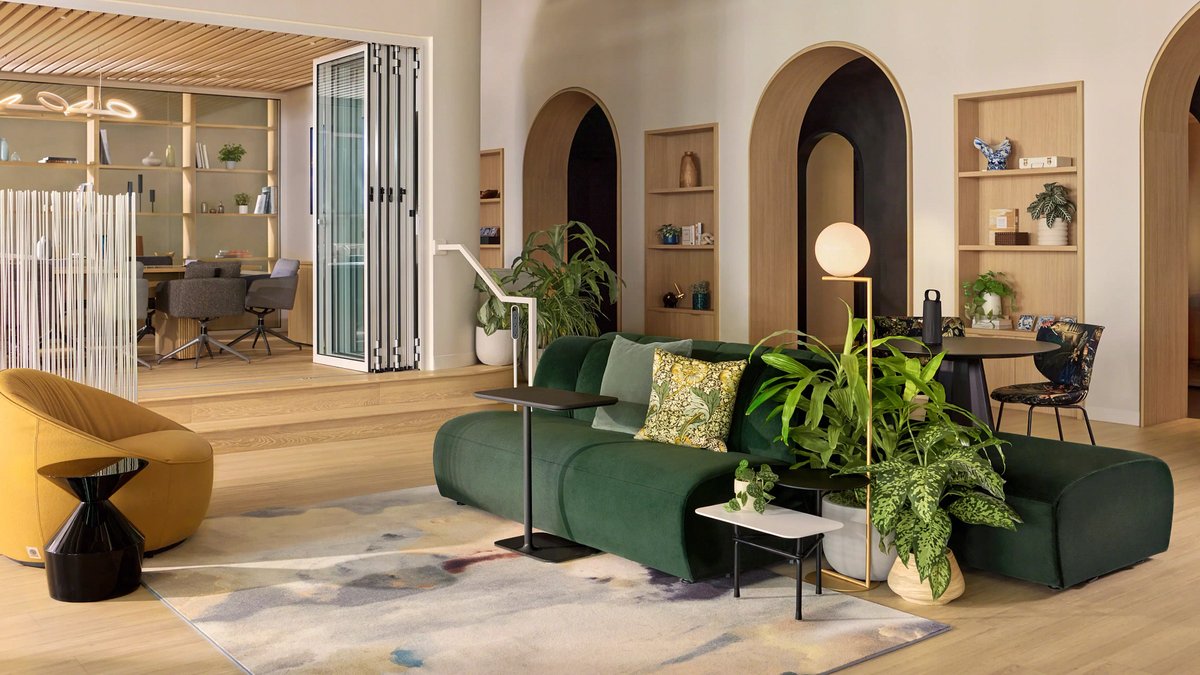
Workplaces are now prioritizing brain function alongside physical comfort. Ergonomic chairs, adjustable desks, and proper lighting have long been staples, but emerging research demonstrates that cognitive performance hinges equally on how spaces influence mental focus, memory retention, and stress reduction.
Steelcase’s latest research exposes a critical oversight in workplace design. Traditional setups assume employees can maintain high cognitive output indefinitely, yet the brain operates like any other organ—its efficiency depends on environmental conditions. Noise, visual clutter, and frequent interruptions drain attention, much as physical strain weakens muscles. The answer lies in what Steelcase terms cognitive ergonomics: deliberate design choices that minimize mental fatigue while enhancing productivity.
A joint study with the University of Wisconsin-Madison’s Center for Healthy Minds revealed that semi-enclosed workspaces, those featuring partial barriers or privacy screens, improved focus more effectively than fully open layouts, even when ambient noise levels remained unchanged. The determining factor was visual privacy, allowing employees to control their attention without complete auditory isolation. Solutions like modular screens, enclosed pods, or partitioned workstations enable teams to reclaim cognitive capacity for deep work.
How physical tools reduce mental fatigue
The brain’s limited memory capacity further shows the need for external supports. Cognitive offloading, using tools like whiteboards, sticky notes, or collaborative walls, reduces mental load. When ideas are physically displayed, teams identify patterns and connections more efficiently than by relying on internal memory alone. Physical surfaces offer a distinct advantage: unlike digital tools, whiteboards or pin-up boards allow simultaneous multi-person engagement, easing the strain of mentally tracking information.
Movement also plays a vital role, yet most offices default to seated work. Research indicates that alternating between sitting, standing, or perching on high stools enhances alertness and memory. Steelcase’s data shows that workspaces with adjustable-height desks or standing collaboration areas help employees sustain engagement. These adjustments benefit cognitive energy directly, a standing meeting, for instance, can transform passive listeners into active participants simply by altering posture.
Beyond focus, innovation thrives on connection. Spontaneous interactions in café-style lounges or casual breakout areas stimulate creativity and knowledge sharing, which studies link to improved problem-solving. However, recovery periods are equally essential. The brain cannot maintain constant concentration; it requires breaks. Quiet lounges with natural materials like wood or soothing colors provide mental resets, lowering stress and restoring clarity before the next task.
AI era demands cognitive-focused office designs
As artificial intelligence automates routine tasks, human strengths, creativity, collaboration, and critical thinking, will determine success. The most effective workplaces will prioritize these abilities, judged not by size but by their ability to support cognitive function. The aim is not to eliminate all distractions but to eliminate them strategically when concentration is critical.
Steelcase’s findings reflect a broader industry shift: treating the brain as deliberately as the body. Small, targeted changes, such as privacy screens, movable furniture, or designated quiet zones, can deliver significant returns. The core challenge shifts from acquiring new furniture to reimagining how environments shape thought processes.
For businesses, the implications are straightforward. Brain health is not an abstract concept; it manifests in floor plan layouts, whiteboard placement, or the choice between open desks and semi-enclosed booths. The most successful workplaces will not merely accommodate work; they will design spaces that align with how people actually think and perform.


